
De-icing vs. Sanding: What’s Best for Your Commercial Property
January 7, 2026
Explore the strengths of de-icing and sanding to choose the best winter maintenance strategy for your commercial property’s safety and longevity.
Winter weather brings sidewalks, parking lots, and entryways that need careful attention to stay safe and accessible. Choosing the right surface treatment to manage ice and snow keeps your commercial property open, welcoming, and ready for business.
Two of the most common winter maintenance methods are de-icing and sanding. Both improve traction and reduce slip hazards, and each serves a different purpose with distinct advantages depending on your site’s needs.
So, when it comes to de-icing vs. sanding, which is best for your commercial property? Let’s break down the differences, benefits, and ideal use cases to help you make an informed decision this winter season.
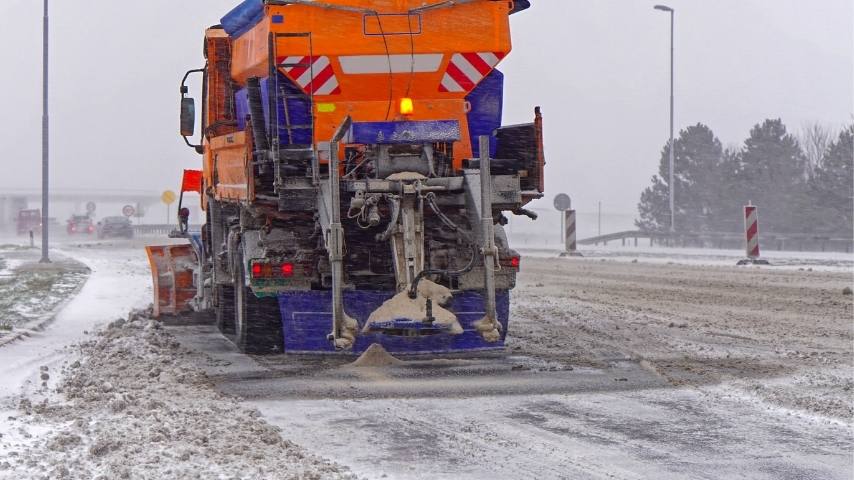
What Is De-icing?
De-icing is the process of melting existing ice using chemical agents, typically rock salt (sodium chloride), calcium chloride, or magnesium chloride. These products lower the freezing point of water, allowing ice to melt even in subfreezing temperatures.
Common De-icing Materials
- Sodium Chloride (Rock Salt): Most commonly used for roads and parking lots; effective down to about 15°F.
- Calcium Chloride: Fast-acting and effective at much lower temperatures (down to about -25°F).
- Magnesium Chloride: Gentler on surfaces and landscaping; works well down to about -13°F.
Benefits of De-icing
- Melts ice that has already formed
- Improves safety in high-traffic areas
- Works quickly when conditions change
- Keeps walkways and entrances clear for pedestrians
De-icing is often used after a snowstorm or freeze to clear buildup from surfaces like concrete walkways, asphalt drive lanes, and loading zones.
What Is Sanding?
Sanding involves applying abrasive materials such as sand or fine gravel to icy surfaces to improve traction. Sanding does not melt ice. It reduces slipperiness by creating friction between the surface and foot or vehicle traffic.
Common Sanding Materials
- Coarse Sand or Cinders: Used to improve traction on walkways, sidewalks, and roads.
- Sand-Salt Blends: Combine abrasive action with some melting power, offering a balanced approach.
Benefits of Sanding
- Immediate traction on icy surfaces
- Ideal for extremely cold temperatures where salt is less effective
- Lower environmental impact
- Useful for gravel lots or areas prone to refreezing
Sanding is commonly applied during and after storms, especially in areas with persistent ice or temperatures below salt’s effective range.
De-icing vs. Sanding: Key Differences
Understanding the differences between de-icing and sanding helps commercial property managers choose the most effective method for their site conditions.
| Feature | De-icing | Sanding |
| Primary Function | Melts ice | Improves traction |
| Best For | Paved surfaces (asphalt/concrete) | Gravel lots, sidewalks, extreme cold |
| Effective Temperature | Depends on material (about -25°F to 15°F) | Any temperature |
| Longevity | Short-term (may require reapplication) | Can remain until swept or washed away |
| Environmental Impact | Higher (chemical runoff) | Lower (requires cleanup) |
| Investment | Varies with product and quantity | Varies with material and cleanup needs |
When to Use De-icing on Commercial Properties
De-icing is your go-to strategy when ice buildup is present and needs to be cleared quickly. It’s especially valuable for:
- Parking lots and drive lanes where vehicle traffic needs quick melting
- Sidewalks and entryways where foot traffic is heaviest
- Priority access routes like loading docks and fire lanes
Pro tip: Pre-treatment before a storm, known as anti-icing, keeps snow and ice from bonding to surfaces and makes cleanup easier afterward.

When to Use Sanding on Commercial Properties
Sanding is the right choice when traction is the priority, especially on:
- Extremely cold days when salt is less effective
- Steep driveways or slopes that need extra grip
- Gravel lots or unpaved surfaces where salt isn’t suitable
- Environmentally sensitive areas near landscaping or drainage systems
Sanding is also useful as a supplemental treatment after de-icing, especially if refreezing is likely overnight.
Can You Use De-icing and Sanding Together?
Yes. Combining both methods is often the most effective winter maintenance strategy for commercial properties. A salt-sand mix provides both melting power and traction, offering a balanced solution for a wide range of conditions.
This approach is especially useful for large commercial campuses or sites with mixed surface types, like asphalt lots, concrete sidewalks, and gravel access roads.
Choosing the Right Strategy for Your Property
The ideal winter maintenance approach depends on several factors:
1. Surface Type
Concrete and asphalt respond well to de-icers, while gravel or decorative stone surfaces may be better suited to sanding.
2. Temperature Range
When temperatures frequently drop below 15°F, traditional salt de-icers become less effective, which makes sanding or a lower-temperature de-icer the smarter choice.
3. Traffic Patterns
High-traffic areas benefit from rapid response and clear surfaces, so de-icing is often the best fit for these zones.
4. Environmental Considerations
If your property is next to storm drains, landscaping, or water features, limiting salt use may be a priority. Sanding or environmentally friendly de-icers are a strong fit in these areas.
5. Application Frequency
De-icing products may need frequent reapplication during active storm cycles, while sand can stay in place longer between treatments. Your plan should balance both based on how your site performs through the season.
Most property managers settle these details during a pre-season site walkthrough. Our commercial snow removal checklist outlines what to review before the first storm.
The Martinson Advantage: Customized Snow Removal Plans
At Martinson Services, every commercial property has its own winter maintenance needs. That’s why we build customized snow removal plans before the season begins, balancing de-icing and sanding based on your site’s layout, traffic, and safety requirements.
Our services include:
- Pre-treatment and post-storm de-icing
- Strategic sanding for traction
- Phones answered 24/7 during snow season
- Emergency response for storm events
- Environmentally responsible material selection
Whether you manage a retail center, office park, or industrial site, our team keeps your property safe, accessible, and professional-looking all winter long.

Conclusion: De-icing vs. Sanding, Which Should You Choose?
There’s no one-size-fits-all answer to de-icing vs. sanding. Each method has its strengths, and the best choice depends on your property’s unique needs. For most commercial properties, a strategic combination of both delivers the best results throughout the winter season.
A well-planned winter maintenance strategy keeps your property safe, accessible, and ready for business all season. Martinson Services builds each plan around your site’s surfaces, traffic patterns, and priorities for consistent results from the first storm to the last.
Ready for a Customized Winter Maintenance Plan?
Since 1986, Martinson Services has provided tailored winter solutions for commercial properties across the Denver metro from our locations in Thornton and Sheridan. Whether your site calls for precise de-icing, strategic sanding, or a combination of both, our experienced crews keep your property clear, compliant, and accessible all winter long.
Contact us to schedule a site assessment and build your custom winter maintenance plan.

Martinson creates custom maintenance plans tailored to each client’s situation with the most qualified operators and advanced equipment delivering exceptional service.
EXPLORE
CONTACT
NEWLETTER
Sign up for our latest news & articles. We won’t give you spam mails.