
Rocky Mountain High Maintenance: Sealcoating Parking Lots in Colorado
April 2, 2026
Sealcoating parking lots in Colorado: how it protects asphalt from sun, water, and freeze–thaw cycles, plus prep, timing, curing, and reapplication.
Sealcoating parking lots in Colorado is one of the most effective ways to keep asphalt strong, smooth, and looking its best. A sealcoat adds a protective layer that shields pavement from sun, water, and freeze–thaw cycles common along the Front Range.
Quick facts for Colorado property managers:
- What it is: a protective liquid coating applied over asphalt to seal surface pores
- Frequency: every 2–3 years in Colorado’s climate
- Best timing: late spring through early fall, with temperatures above 50°F
- Curing time: 24–48 hours before vehicle traffic resumes
- Key benefit: a longer pavement life and a clean, professional appearance
- Preparation: crack filling and pothole repair come before sealcoating
Sealcoating is preventative maintenance that keeps good asphalt in good condition. Any existing damage is repaired first, and the sealcoat then protects your investment going forward. It works like sunscreen for your pavement, and the deep black finish refreshes your property’s curb appeal.
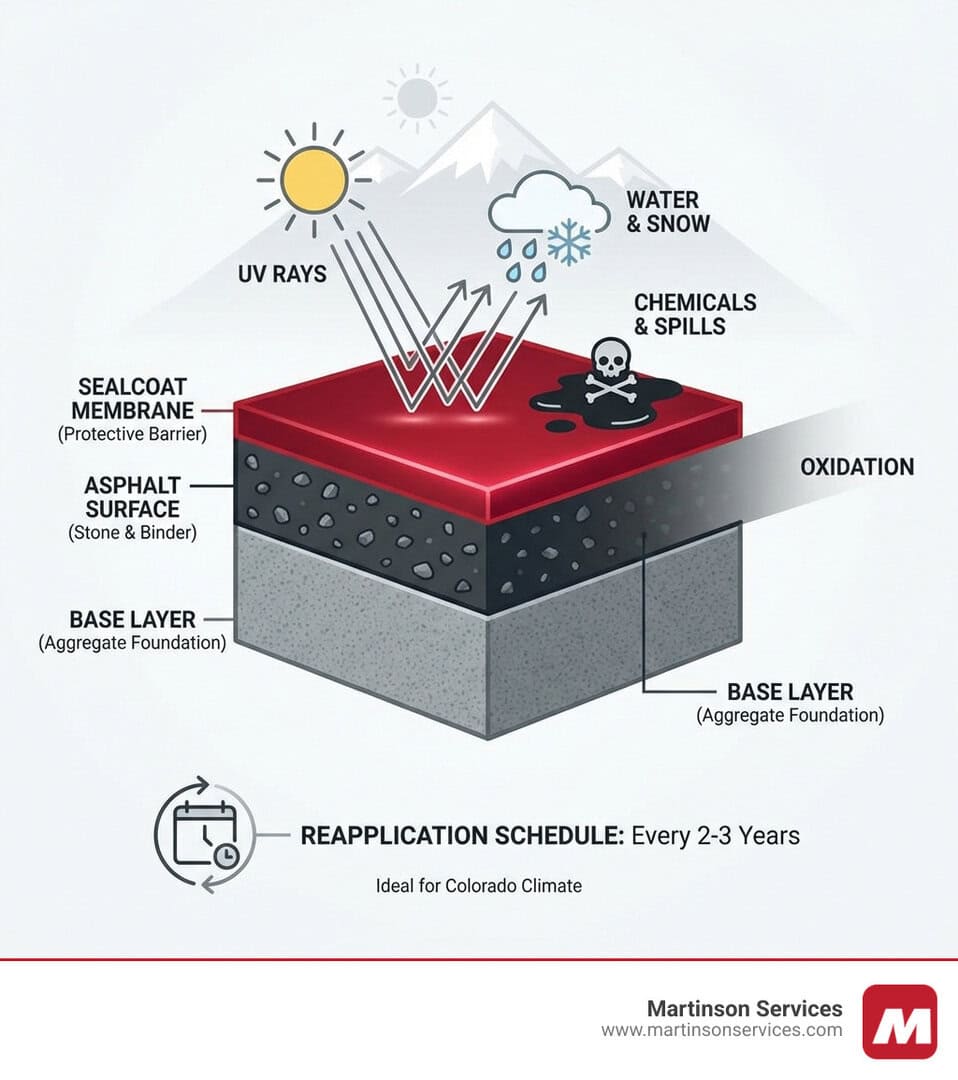
How Sealcoating Protects Colorado Asphalt
Asphalt is a mixture of stone (aggregate) and a petroleum-based binder that holds it together. When it’s first installed, that binder is flexible and resists water. Over time, the environment gradually wears those qualities down.
At Colorado’s elevation, UV exposure is especially strong. Sunlight oxidizes the binder, turning pavement from deep black to gray and making it more brittle. As it hardens, the surface flexes less under vehicle weight, and small cracks begin to form.
Freeze–thaw cycles add another factor. When snow melts during the day and refreezes at night, water that has worked into the pavement expands by about 9% as it freezes, widening cracks over time. Our guide to how weather impacts your asphalt covers these seasonal effects in more detail.
A sealcoat creates a protective membrane over the surface. It helps keep water out, resists oil and fuel spills, and slows oxidation, so the binder underneath stays flexible longer.
Key Benefits for Commercial Properties
For property owners across the Denver metro, a parking lot is a significant capital asset. Regular sealcoating, paired with crack filling and timely repairs, helps that asset reach its full lifespan and keeps major projects planned on your schedule.
- Longer pavement life: a scheduled maintenance program helps asphalt last well beyond what an unsealed surface typically achieves.
- Curb appeal: a fresh, dark finish gives your property a polished, professional look for customers and tenants.
- Clear markings: a uniform black surface provides strong contrast for fresh line striping, crosswalks, and ADA markings.
- Predictable planning: preventative care keeps maintenance steady and easy to schedule.
The Professional Sealcoating Process
A long-lasting sealcoat depends as much on preparation as on the material itself. A clean, repaired surface lets the sealant bond properly and perform for years.
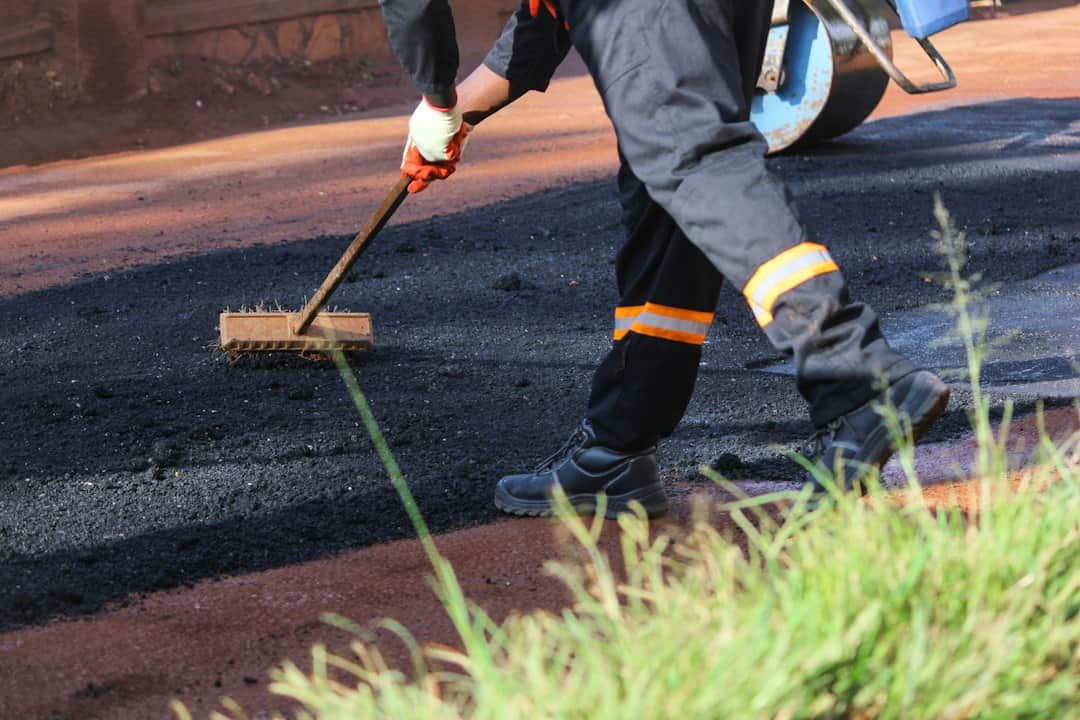
Preparing the Surface
The process starts with a thorough cleaning to remove dirt, dust, and loose debris. Oil spots are treated so the sealant adheres evenly across the entire lot. Before any sealant is applied, the pavement is repaired:
- Crack filling and crack sealing keep water from reaching the base.
- Asphalt repair addresses potholes and areas of alligator cracking through patching or remove and replace.
- Vegetation removal clears weeds growing in cracks and along edges.
If you’re still deciding on a surface for a new lot, see our comparison of concrete vs. asphalt for commercial parking lots. Asphalt’s flexibility is one of its greatest strengths, and regular sealing helps preserve it.
Applying and Curing the Sealcoat
Professional-grade commercial sealant is applied in even coats across the prepared surface, with the number of coats matched to the lot’s traffic and condition. Once applied, the lot needs a 24–48 hour curing window. During that time, moisture evaporates and the coating hardens into a durable protective film. Line striping is applied after the sealcoat cures.
Timing and Maintenance Along the Front Range
Temperature is the key to a successful sealcoat. Both the air and the pavement should be at least 50°F and rising, with dry weather in the forecast. In Colorado, that makes late spring through early fall the main sealcoating season. Spring is especially popular, as it’s the perfect time to refresh the lot after winter. Our spring parking lot maintenance guide covers the full spring checklist.
For most commercial lots, reapplying every 2–3 years keeps the protective layer in place. Busy retail centers and industrial sites with heavy traffic may benefit from the shorter end of that range. Pairing sealcoating with year-round commercial property maintenance keeps your pavement on a steady schedule.
Frequently Asked Questions About Sealcoating
Does sealcoating repair existing cracks and potholes?
No. Sealcoating is a protective layer, not a structural repair. It can fill very fine surface pores, but larger cracks need crack filling, and potholes need an asphalt repair before sealcoating begins.
How long before traffic can return?
The surface may feel dry within a few hours under Colorado sun, but it needs time to cure fully. Vehicle traffic should stay off for at least 24 hours, and ideally 48 hours. Shade and humidity can extend that window. Foot traffic is usually fine sooner.
How do I plan a sealcoating project?
Start with a pavement assessment to identify repairs, then schedule sealcoating and striping in phases that keep parking available. Our guide to hiring for parking lot paving and maintenance walks through the full planning process, and our gallery shows examples of our work.
Protect Your Pavement with Martinson Services
Since 1986, Martinson Services has helped commercial properties across the Denver metro keep their pavement in excellent condition from our locations in Thornton and Sheridan. We build customized maintenance plans that combine commercial sealcoating and crack filling services with asphalt and concrete maintenance, snow removal, and landscape maintenance, so your property stays safe, attractive, and ready for business year-round.
Contact us to schedule a pavement assessment or request a free quote.

Martinson creates custom maintenance plans tailored to each client’s situation with the most qualified operators and advanced equipment delivering exceptional service.
EXPLORE
CONTACT
NEWLETTER
Sign up for our latest news & articles. We won’t give you spam mails.